The art of a slower home
Reset your rooms with practical changes that use what you already own.
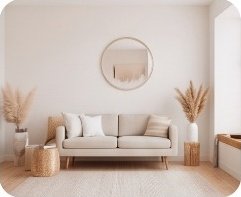
Illustrative image supplied in the design references.
Start with one friction point
Instead of redesigning an entire room, identify one thing that makes daily life harder. It might be a chair covered in clothes, a table with nowhere to set a cup, or a reading corner that is too dark. Describe the problem as an action: “I need somewhere to put my bag when I arrive.” That gives you a useful test for every change you make.
Reset before buying
Choose a small area and remove everything except the furniture. Clean the surface, then return only the items that support its purpose. For an entryway, that could be a tray for keys and a basket for a bag. Move unrelated items to where they are actually used. Keep a temporary box for undecided objects, but set a date to sort it so it does not become permanent storage.
Use texture with a purpose
A woven basket can hold blankets; a washable cover can make a chair easier to maintain. Choose materials for both their feel and their upkeep. Before buying a pale rug or delicate fabric, consider muddy shoes, pets, and how often you realistically clean. A quieter room comes from fewer competing details, not from a particular expensive material.
Make light part of the layout
Observe the room in the morning and evening. Move a reading chair where light helps you, while keeping walking routes clear. If you add a lamp, position it so the light reaches the page without shining directly into your eyes. Secure cords away from paths. Keep textiles and furniture clear of heaters and follow the lamp manufacturer’s safety guidance.
Try the layout for a week
Live with the change before purchasing anything. Notice whether the original problem is easier: does the bag reach its basket, or still land on the chair? If the habit has not changed, move the storage closer to the action. Finish with one object you enjoy seeing. The aim is a home that works naturally, rather than a photograph that is difficult to maintain.